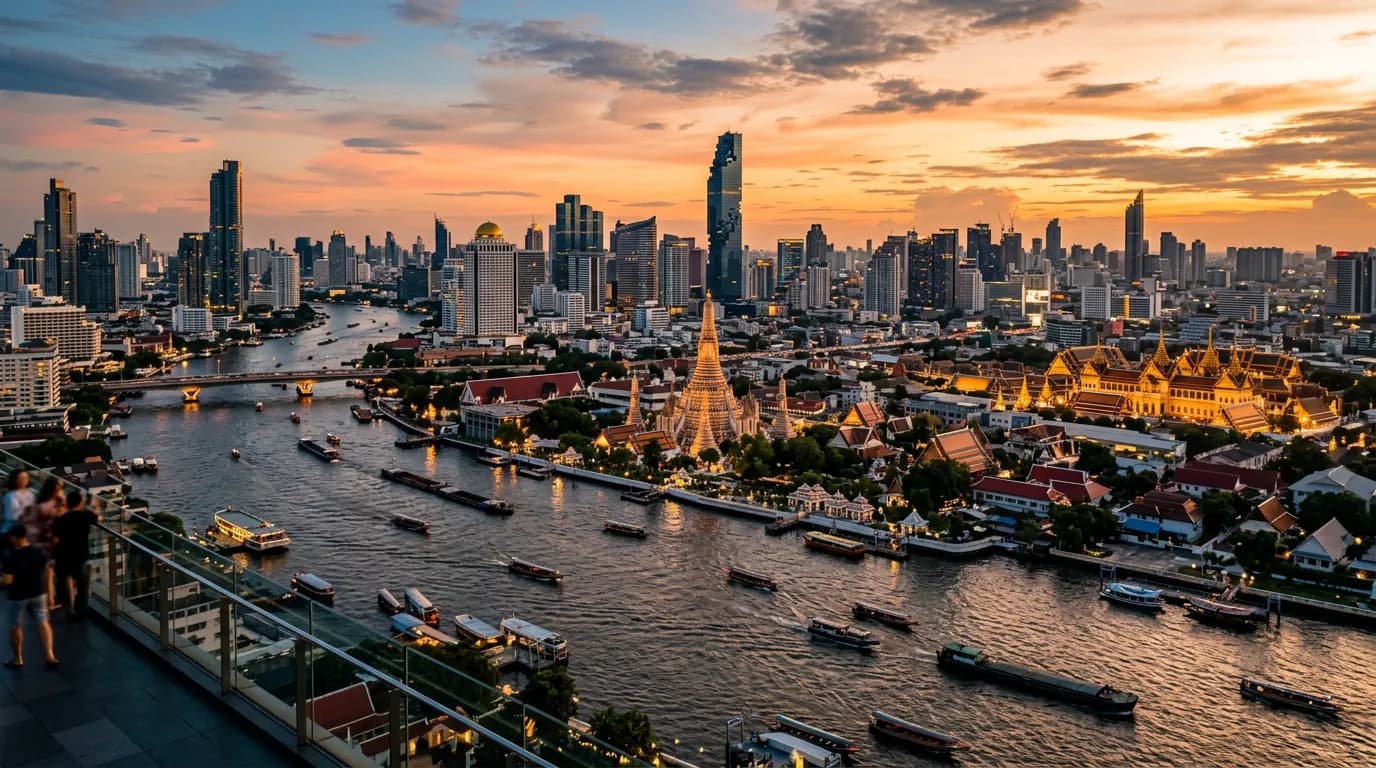
Bangkok
29°
Today
36°
Sat
37°
Sun
39°
Mon
At a Glance
No ratings yet· log in to rate
Temples, street food and rooftop views
A vibrant, chaotic metropolis where ornate temples and riverside life meet legendary street food and nightlife. Bangkok rewards slow exploration with markets, rooftop bars and a mix of modern malls and traditional neighborhoods.
Best Time to Visit
Very hot days but fewer rainy interruptions; plan outdoor activities for early morning or late afternoon.
Cost of Living
Daily budget per person
Hostels, street food, public transit
Mid hotels, sit-down meals, some activities
Nice hotels, fine dining, taxis
Avg monthly salary
$758/mo net
Monthly rent (1 bedroom)
City center
$741/mo
Outside center
$374/mo
Typical prices
Local Tips
Temple dress code
Cover shoulders and knees at temples; sarongs or pants are often available at entrances if needed.
Use public transit
The BTS Skytrain and MRT are fast, air-conditioned and avoid traffic—stay near stations to save time, and carry a light layer for cold trains.
Carry cash
Many street vendors, tuk-tuks and small eateries accept cash only; ATMs are common but sometimes charge fees.
Get local data
Buy an eSIM or local SIM at the airport to use Grab/Bolt and maps immediately—reliable internet makes getting around much easier.
Avoid elephant rides
Don't support elephant riding or shows—many operators use abusive training; choose ethical wildlife experiences instead.
At a Glance