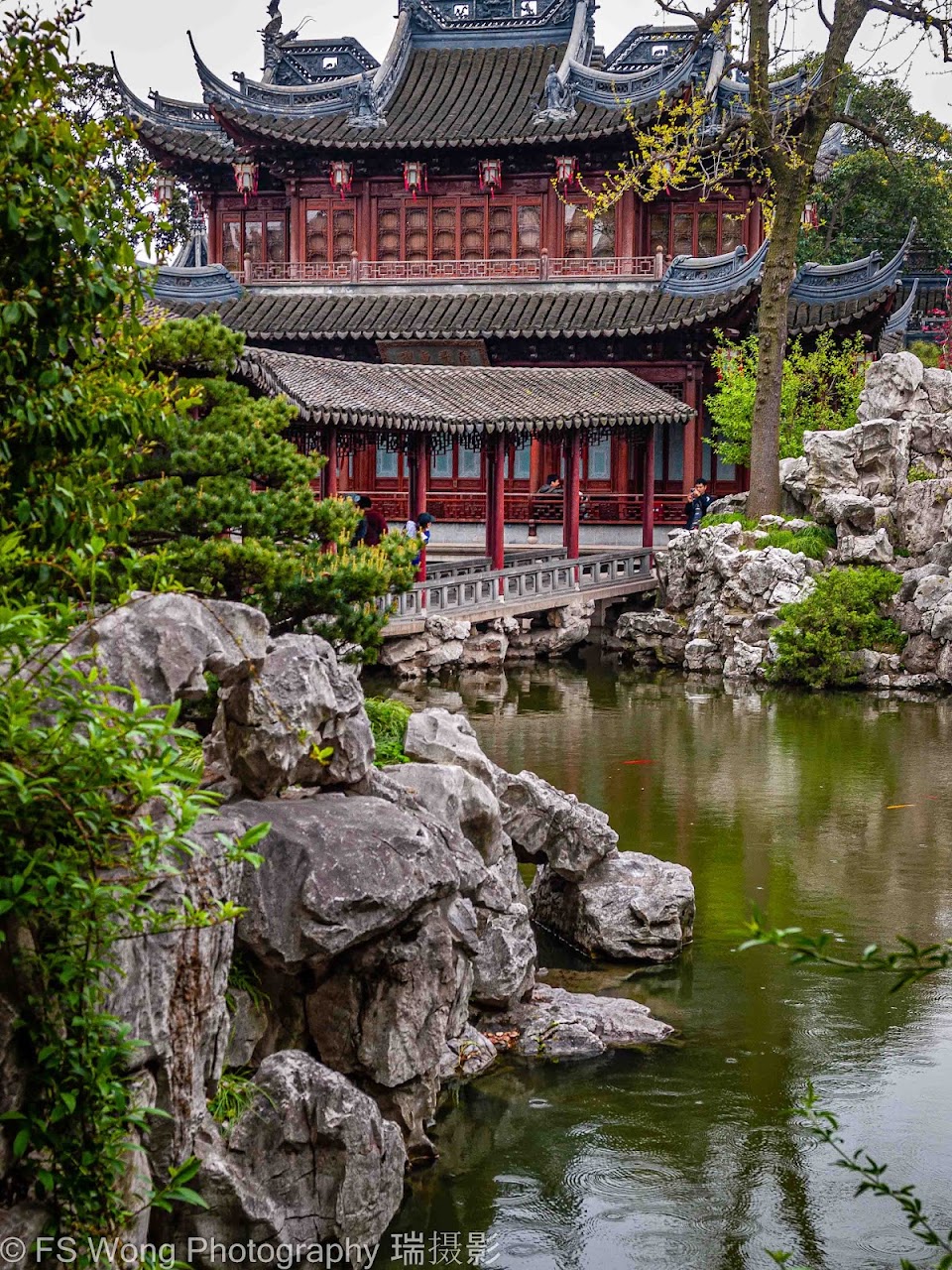
Shanghai travel guide
Plan a trip to Shanghai, China — things to do, where to stay, food, transport, and local tips. Start with Yuyuan Gardens, The Bund, its own article, Huaihai Road (M).
When to go
Mar–May
March· Ideal
Mild temperatures and lower humidity make sightseeing comfortable, with spring flowers and generally good air quality relative to summer.
Right now
Getting there
Map
Places mentioned in this guide
Highlights
Shanghai offers a dense mix of historic and ultra-modern sightseeing, with many major attractions spread across district articles rather than a single center. The most notable experiences include the Old City and Yuyuan Gardens, the Bund and early 20th-century colonial architecture, the skyscraper cluster of Pudong, the fashionable French Concession, and a strong lineup of museums, temples, parks, water towns, and performance traditions.
Core sightseeing areas
historicgardenstourist area
The Old City is Shanghai’s original Chinese settlement, going back about 1000 years, and remains one of the city’s main tourist areas. Its center is Yuyuan Gardens, making this area especially useful for visitors who want a concentrated historic experience. The input also notes that individual listings are covered in district articles, so this is a good starting point for exploring traditional Shanghai in context.

Michael Tyler · CC BY 3.0
architecturewaterfrontcolonial-era
The Bund is one of Shanghai’s defining sightseeing areas, especially for visitors interested in the city’s colonial-era and waterfront identity. The listing places it within the International Settlement and highlights its early 20th-century buildings in Neoclassical, Art Deco, Gothic and other European styles. It also ties directly to the city’s image as a historic trading and financial center.
parktransport hubcentral
People’s Square is described as a major downtown park and a key urban hub rather than just a green space. The former horse-racing track now anchors a busy central area, with a museum, restaurant, large malls and one of the busiest subway interchanges on Earth beneath it. That combination makes it important both for sightseeing and as a practical base.
shoppingpedestrian streetcity walk
Nanjing Road is presented as Shanghai’s major upmarket shopping street, but it is also a significant sightseeing corridor because it links several of the city’s best-known landmarks. The east section runs pedestrian-only from the Bund toward People’s Park, while the west continues into Jing'an District toward Jing’an Temple. Together, they capture both old concession history and present-day commercial energy.
Art and museums
contemporary artgalleriesadaptive reuse
M50 is described as Shanghai’s main center for contemporary Chinese art, with dozens of studios and galleries in a former factory in Putuo District. The industrial reuse matters here: the setting itself reflects how Shanghai’s art scene often occupies renovated former industrial buildings away from the city center. For visitors, that makes it a focused and distinctly urban art destination.
contemporary artmuseumindustrial conversion
This museum stands out because it was once an old power plant, then became an Expo 2010 pavilion, and later the first state-run contemporary art museum in China. Its location on the Huangpu River adds to its appeal, but the main reason to visit is its role in the transformation of Shanghai’s industrial spaces into major cultural institutions.
museummodern Chinese artExpo 2010
The China Art Museum in Pudong is housed in the former China Pavilion of the 2010 World Expo and is dedicated to modern Chinese art. Its highlighted feature is a digital animated version of Along the River During the Qingming Festival, which gives it a clear signature attraction. That combination of architecture, expo history and art focus makes it one of the city’s major museum stops.

lienyuan lee · CC BY 3.0
museumcentralculture
Shanghai Museum is one of the key institutions listed in Huangpu, opposite People’s Square, alongside the Shanghai Urban Planning Museum. Its inclusion in the central downtown cluster makes it easy to combine with other major sights. The input does not describe the collection in detail, but it clearly places the museum among the city’s essential cultural stops.
Traditional gardens and heritage architecture
Classical gardens
gardenstraditionalheritage
Shanghai is portrayed as a modern city that still preserves important examples of traditional Chinese garden art. The listed gardens, including Yuyuan, Guyi Garden, Qiuxia Garden, Qushui Garden and Zuibai Pond, give visitors several ways to experience landscaped heritage beyond the central tourist core. They are valuable for travelers who want a quieter contrast to skyscrapers and shopping streets.
architecturehistoric districtcolonial-era
For 1920s Shanghai and early modern architecture, the Bund and the International Settlement are described as the place to go. The area began developing in the 1840s and contains waterfront buildings in a range of European styles, once used by foreign banks, consulates and trading companies. It is one of the clearest places to see Shanghai’s colonial-period urban history.
Shikumen Buildings
architectureresidential heritagelocal style
Shikumen are presented as unique Shanghai lane houses that combine Western terrace forms with traditional Jiangnan courtyard layouts, marked by distinctive stone-framed gateways. The description makes them important not just as buildings but as a local architectural type that reflects Shanghai’s cultural blending. They are a recognizable part of the city’s historic urban fabric.
architecturevillasFrench Concession
These villas are highlighted as high-end residences from the 1920s to 1940s, featuring spacious layouts, private gardens and modern domestic facilities. Many are former homes of famous historical figures, which adds a human and political layer to the architectural appeal. The best-known examples are on Wukang Road, Hengshan Road and in Sinan Mansions.
Temples and religious sites
.jpg)
Haluk Comertel · CC BY 3.0
templeBuddhistcentral
Jing'an Temple is a large Buddhist temple in Jing'an District and is especially convenient because it sits next to the metro stop named after it. Its position makes it easy to combine with nearby park and shopping visits, while the temple itself is one of the city’s better-known religious landmarks. It represents the mix of centrality and tradition found in Shanghai’s urban core.
templeZen BuddhistFrench Concession
Longhua Temple is described as a Zen Buddhist temple on the southern edge of the French Concession, which makes it one of the major religious sites within one of Shanghai’s most fashionable districts. Its placement suggests a good stop for visitors combining historic neighborhoods with spiritual heritage. The listing identifies it as one of the city’s notable temples worth including in a broader sightseeing route.
templesTaoistConfucian
The old town contains both the Taoist Temple of the Town God and the Shanghai Confucian Temple, making it a compact place to see multiple traditions in one district. This matters because the area is already a major tourist destination anchored by Yuyuan Gardens, so visitors can easily combine religious heritage with traditional urban scenery without leaving the historic core.
Modern skyline and city views
skyscrapersfinancial districtskyline views
Lujiazui is Shanghai’s premier financial district on the eastern bank of the Huangpu River in Pudong, dominated by a cluster of super-tall buildings including Shanghai Tower and the Oriental Pearl Tower. The area is meant to be experienced in several ways: by river tour, on foot, or from observation decks. The connected footbridge network also makes it especially photogenic.
- Footbridges can be crowded during peak tourist seasons, though they are still described as safe.
- People may appear in photos unless you stand close to the railings.
skyscraperobservation deckmodern architecture
The input highlights Shanghai Tower as China’s tallest building and pairs it with the surrounding super-tall cluster in Pudong. Even though the description is brief, the point is clear: this is the city’s top destination for modern skyline architecture and wide panoramic views. It is best appreciated as part of the broader Lujiazui district experience.
Parks, gardens and leisure
Major city parks
parksleisurefamily-friendly
Shanghai’s parks are described as widespread across districts, but several stand out as major destinations in their own right. These include People’s Park, Jing’an Park, Fuxing Park, Lu Xun Park, Gongqing Forest Park, Zhongshan Park, Daning Tulip Park, Shanghai Expo Park and Jinjiang Action Park. The range shows that parks in Shanghai can serve as central gathering spaces, family attractions, or leisure destinations with rides and boats.
parkfamilyboats
Lu Xun Park in Hongkou is named for a famous writer and is described as having kids’ rides and a lake with boats for rent. That makes it more than a formal green space: it combines recreation with a literary connection and family-oriented activities. It is one of the more clearly specified parks for visitors seeking casual outdoor time.
amusement parkFerris wheelcity views
Jinjiang Action Park is an amusement park in the southern part of the French Concession and is singled out for its large Ferris wheel with good views over much of the city. That makes it especially appealing for visitors who want a mix of amusement-park activities and skyline viewing. The metro access also makes it practical to reach.
Water towns and excursions
water townday tripscenic
Zhujiajiao is one of the scenic water towns in the western suburbs, with canals as the main method of transport and many traditional-style bridges and buildings. It is especially popular with Shanghai residents, including expatriates, and even has some bars run by expats. That combination of scenery and local popularity makes it a classic day-trip choice.
water towncloser to downtowntourist-oriented
Qibao is a smaller water town closer to downtown in Minhang district and can be reached by metro line 9. The listing notes that it gets a higher proportion of tourists than Zhujiajiao, so it offers a more compact and visitor-oriented version of the same canal-town experience. It is a practical choice when time is limited.
water townartoutlying excursion
Fengjing in Jinshan district is notable not only as a water town but also for its artists and its well-known Jinshan peasant painting style. The transport note makes clear that reaching it requires more effort than the nearer water towns, but it may reward visitors with a more distinctive artistic identity alongside the canals and traditional buildings.
Performing arts
Huju (Shanghai Opera)
operalocal cultureShanghai dialect
Huju is presented as Shanghai’s most representative local opera and a national intangible cultural heritage. The description emphasizes its roots in late-19th-century folk songs from both sides of the Huangpu River, its focus on ordinary Shanghai life, and its soft melodies in authentic Shanghai dialect. For visitors, it offers a very local cultural experience in small theaters or opera halls.
Shanghai-style Pingtan
storytellingmusicteahouse culture
Pingtan is described as a traditional narrative singing art that arrived from Suzhou in the mid-19th century and blends storytelling with and without singing. It is typically performed by one or two artists with pipa and sanxian accompaniment, using soft dialect and gentle tunes. The teahouse setting is part of the appeal, making it a calm, intimate performance form.
Yue opera
operaregional culturetraditional performance
Yue opera is identified as the second most popular traditional Chinese opera style nationwide and the most popular in Shanghai. Although it originated in nearby Shengzhou, the input stresses Shanghai’s role in developing and popularizing it across China and beyond. The Shanghai Yue Opera House is specifically mentioned as home to one of the country’s premier troupes.
Tips
- Many of Shanghai’s best sights are spread across district articles, so it helps to plan by neighborhood rather than expecting one compact center.
- The French Concession is highlighted as especially strong for boutique shopping, galleries, craft shops and interesting restaurants.
- For skyline photos in Lujiazui, the pedestrian footbridge network is convenient, but peak-season crowds can affect both viewing and photography.
- When visiting tea houses, be cautious about unexpectedly expensive teas or food, and avoid strangers who try to steer you to a venue.
- For current events, museum shows and performances, the municipal Shanghai Cultural Information website is specifically recommended in the input.


